
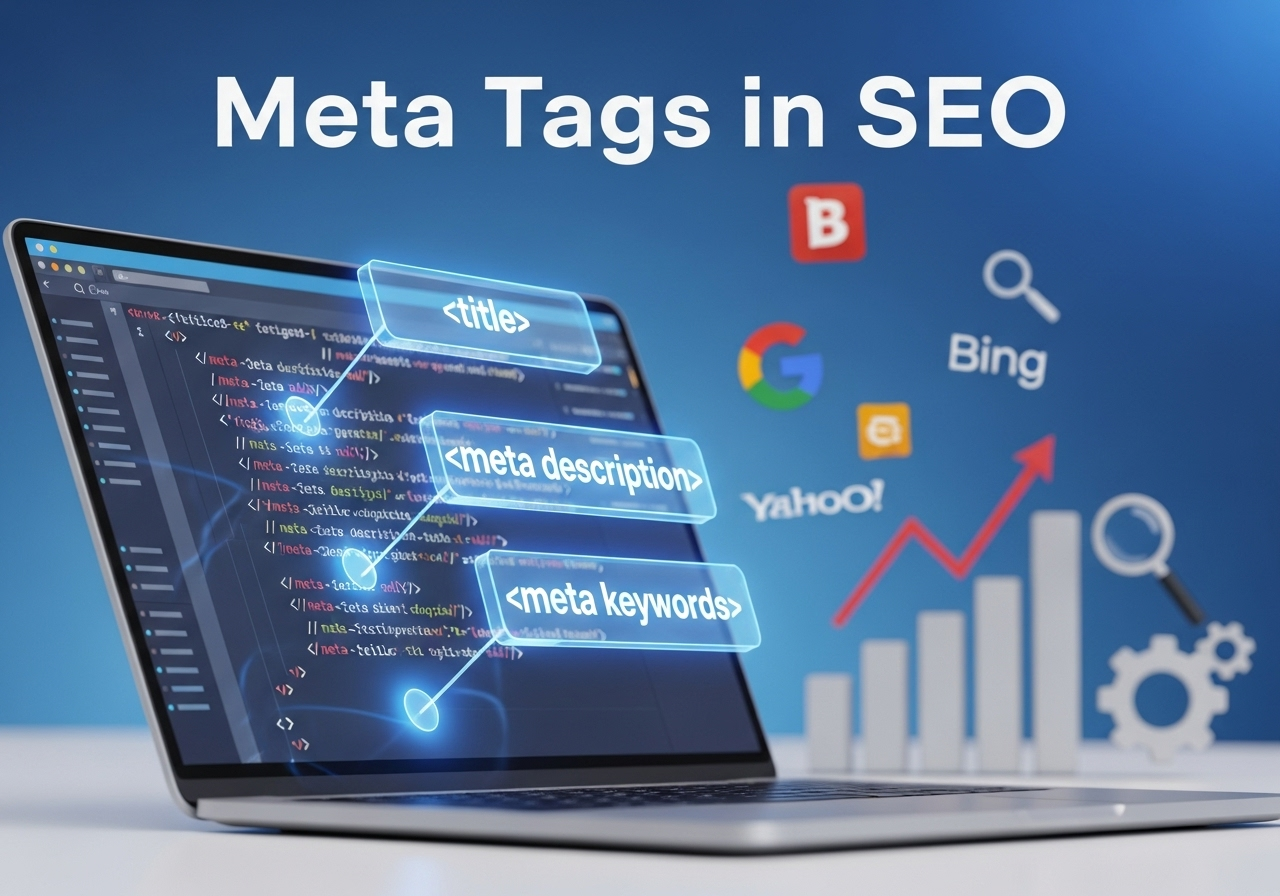
Metatags are the quiet powerhouses of SEO — they tell search engines what your page is about and help users decide whether to click. While they don’t appear directly on your website, they shape how your content looks in search results, influencing both visibility and user engagement. A well-optimized title and description can be the difference between getting ignored or getting noticed.
Even though modern algorithms rely on hundreds of ranking factors, meta tags still hold their ground as essential SEO elements. They ensure your content is indexed correctly, improve click-through rates, and build relevance around your target keywords. In short, meta tags bridge the gap between your content and your audience — making sure your message reaches the right people at the right time.
What Are Metatags?
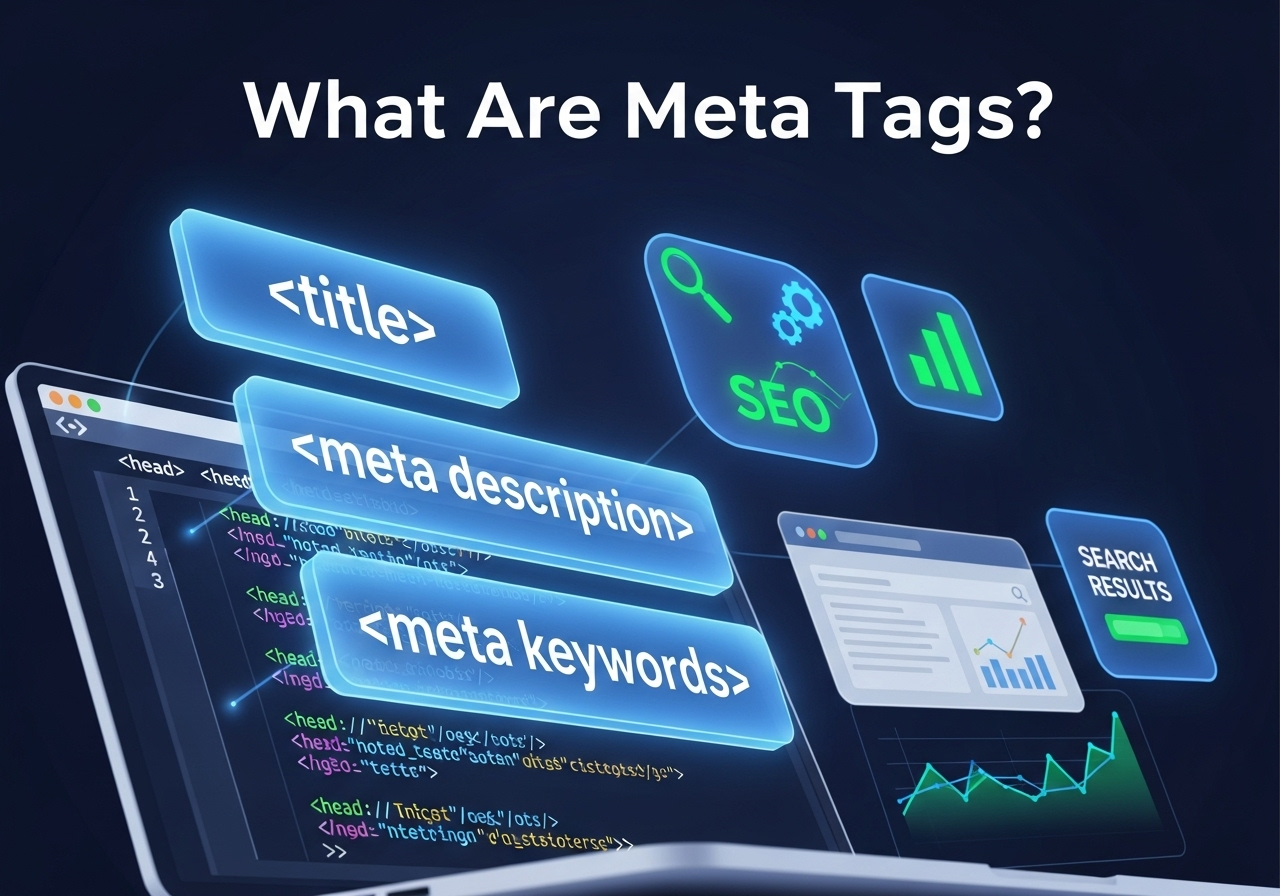
Meta tags are pieces of HTML code that convey important details about a webpage to search engines and users. While you don't see them on the visible page, meta tags operate behind the scenes to help search engines understand what a webpage contains, its purpose, and how relevant it is. In other words, meta tags indicate to Google what your page's topic is and help Google present it accurately in search results, increasing the chances of the right people discovering the page.
There are various types of meta tags, but the ones that are most common are the title tag, meta description, and meta keywords. The title tag specifies the title of the page as it appears in search results, the description provides a brief summary of the content of the page, and the keywords emphasize the primary focus of a webpage. Here's an example of a code snippet:
<head>
  <title>Best Web Development Company in India | Webmerito</title>
  <meta name="description" content="Webmerito offers creative web design, branding, and digital marketing services to help your business grow online.">
  <meta name="keywords" content="web development, SEO, digital marketing, website design, branding agency India">
</head>
Types of Metatags (and Which Ones You Need in 2025)
There are multiple types of meta tags, and each of them has its own unique function to improve how your website ranks on search engines and social media. The meta title (which is also referred to simply as the title) is the tag that appears in search engine results pages (SERPs), and it has a direct correlation to your click-through rate (CTR).
The meta description tag is a brief summary that is placed below your page title, allowing the user to understand what your webpage is about. Meta keywords are no longer a ranking factor, but they can still assist you with organizing and structuring your on-page SEO. The robots meta tag tells search engines whether to index a webpage or follow its links and the viewport meta tag makes sure your site is mobile-compatible and adapts properly to any screen size.
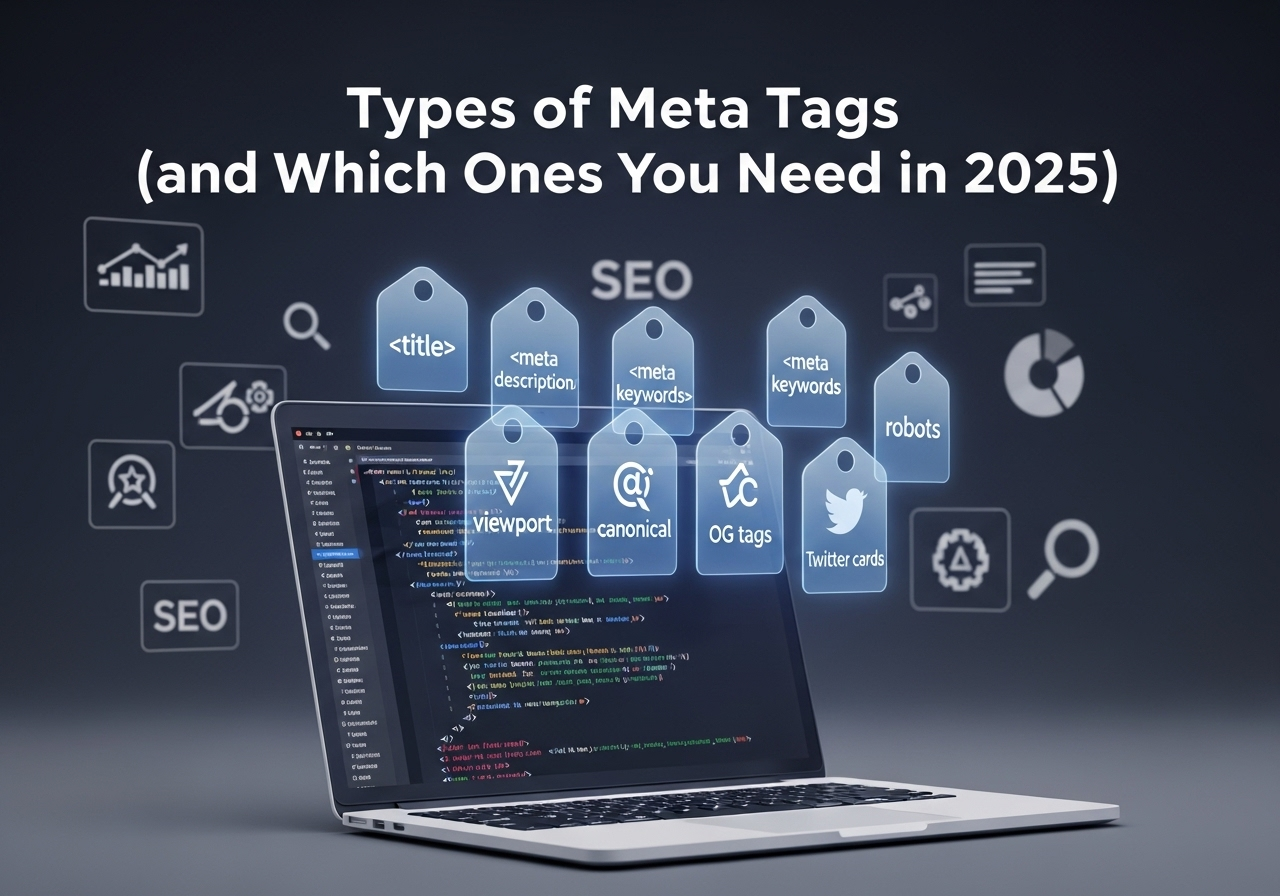
In addition to search engines, Open Graph (OG) tags play a critical function in enhancing the presentation of your content when shared on social platforms such as Facebook and LinkedIn, in the forms of appealing previews with images and descriptions. Likewise, Twitter Card tags improve link previews on Twitter (X), making them more compelling. We conclude with a canonical tag, also referred to as a self-referencing canonical tag, to resolve any potential duplicate content issues by advising search engines to prefer a particular webpage version. All of these meta tags together establish a strong technical infrastructure for visibility, usability, and consistency across the internet.
How to Write SEO-Friendly Metatags
Writing meta tags that are SEO-friendly is a matter of clarity, relevance, and accuracy. Your meta title should accurately describe what page you’re on and, if possible, include your target keyword naturally. It should also be fewer than 60 characters long so that it displays appropriately in search results. Just as the title should effectively describe the page with your keyword, your meta description should summarize the content in an engaging manner and be fewer than 160 characters so that it doesn’t get cut off in search results. Using keywords in both tag types, naturally, helps search engines understand what your content is about while still being user-friendly.
Don't forget to mention your brand name at the end of the title (like "| Webmerito"), so users can recognize and trust you. Just as importantly, keep in mind the number one rule is that all pages on your website must have meta tags that are unique and not duplicated, confusing search engines and users alike. Here’s a simple example:
Title: "Meta Tags in SEO: Complete Guide for Beginners | Webmerito"
Description: "Learn what meta tags are, why they are important from SEO, and how to write titles and descriptions that effectively get clicks in 2025."
Common Mistakes to Avoid
Your SEO and click-through rates can suffer from minor mistakes in your meta tags. A common simple error is duplicate meta titles. Duplicate meta titles occur when multiple pages have the same title, confusing both search engines and users on what to click on. Additionally, you should not stuff the meta title or meta descriptions with random keywords. This makes your content look spammy and less credible.
Consider also missing or empty meta descriptions that do not provide a user context for what a page is about in search results. Or using irrelevant meta tags with misleading descriptions. These all provide decoy meta tags that misrepresent your page. Avoid these mistakes to ensure your meta tags are properly guiding search engines and your possible visitors to the right content.
Tools to Generate or Audit Metatags
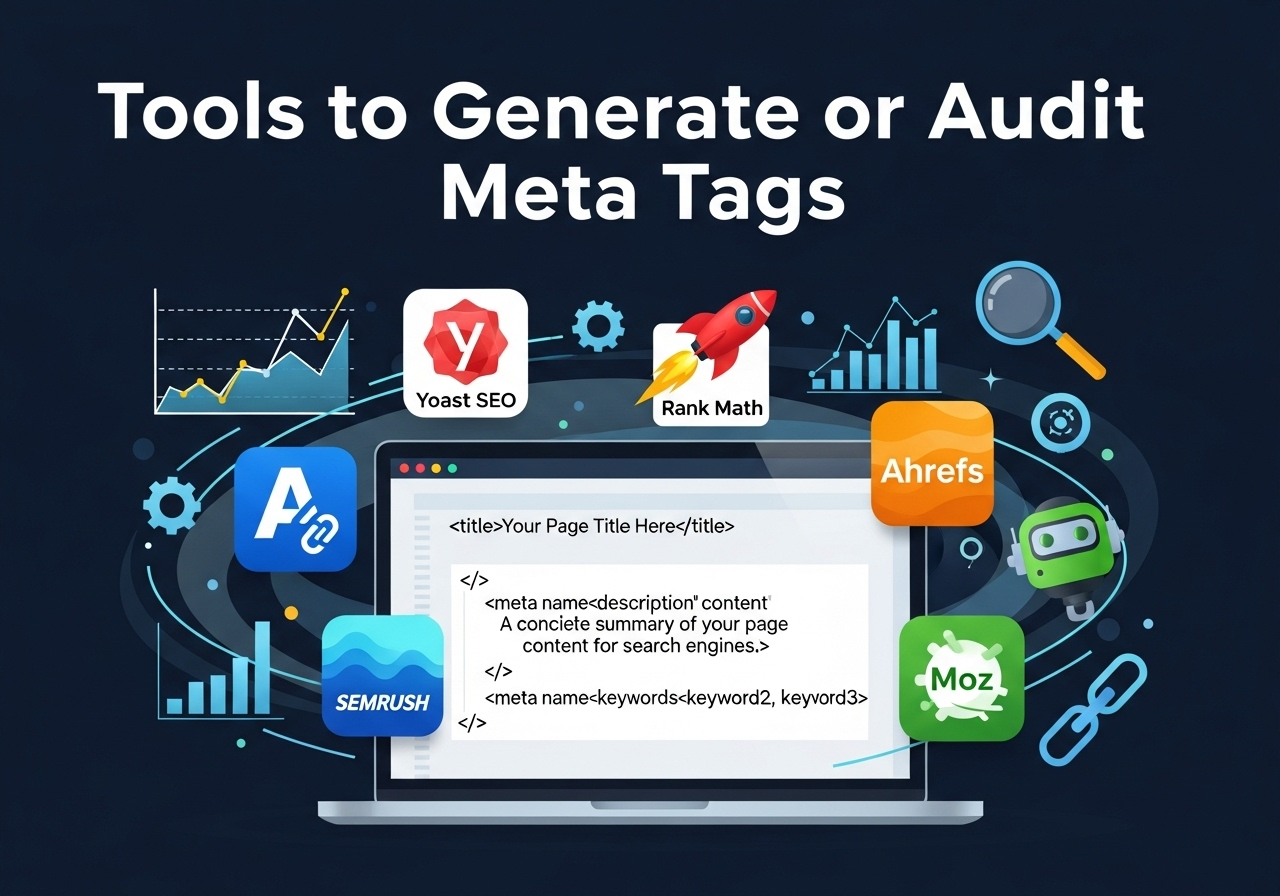
It is easier to optimize meta tags with the appropriate tools. If you are a WordPress user, plugins like Yoast SEO and Rank Math give you a straightforward dashboard to apply, edit, and preview meta titles and meta descriptions, including counting the characters limit, viewing your probable keyword density, and checking the length of both meta titles and descriptions. Other tools for SEO analysis like Ahrefs, SEMrush, and Moz offer a broader audit of your website’s meta tags, HTTP status codes, performance tracking, and offer SEO issues across pages can impact meta elements.
If you want to check individual pages that have properly implemented tags, you could also consider usage of something specific to analyzing the tags such as Meta Tag Analyzer. And, if you are looking for more creative options for a title or description, ChatGPT can help generate titles and descriptions for your markup that are engaging, keyword-rich, and optimized for clicks.
Conclusion
Meta tags might function in the background but do have real effects on search visibility and engagement. Likewise, the titles, descriptions, and other meta tags should be written in a way that allows your content to be indexed accurately, provides eye-catching results in search, and ultimately leads to clicks and user navigation to your site.
“Even if meta tags are off-screen, it does not mean they are not impactful. Have webmerito help audit your site’s meta data today, and make sure every meta tag is speaking your brand’s language.”