

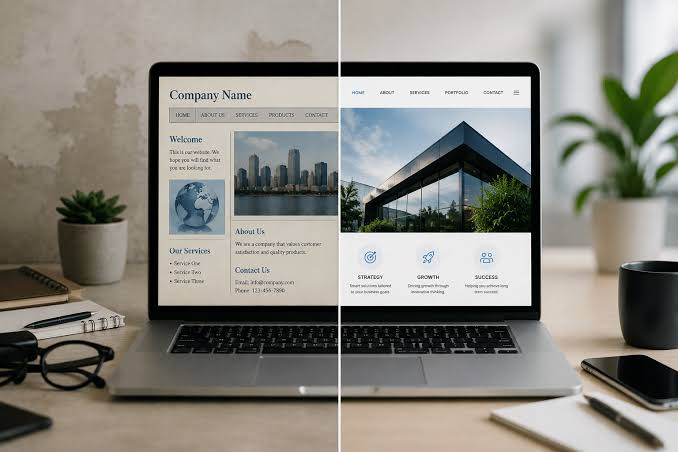
A strong online presence should make it easier for customers to understand your business, trust your brand, and take action. When your website starts creating friction instead of removing it, choosing to redesign your website becomes much more than a cosmetic or visual update.
Many businesses keep the same website for years because it still works technically. The pages load, the contact form exists, and the company information is available. But that does not necessarily mean the website is working well for the people who visit it.
Customer expectations change. Search behaviour changes. Devices change. Businesses add services, update their branding, and target new audiences. A website that once generated enquiries can gradually become difficult to navigate, slow to use, or disconnected from what the business offers today.
So how do you know when it is time for a change? Here are 10 signs worth looking for.
1. Your website looks outdated, redesign your website
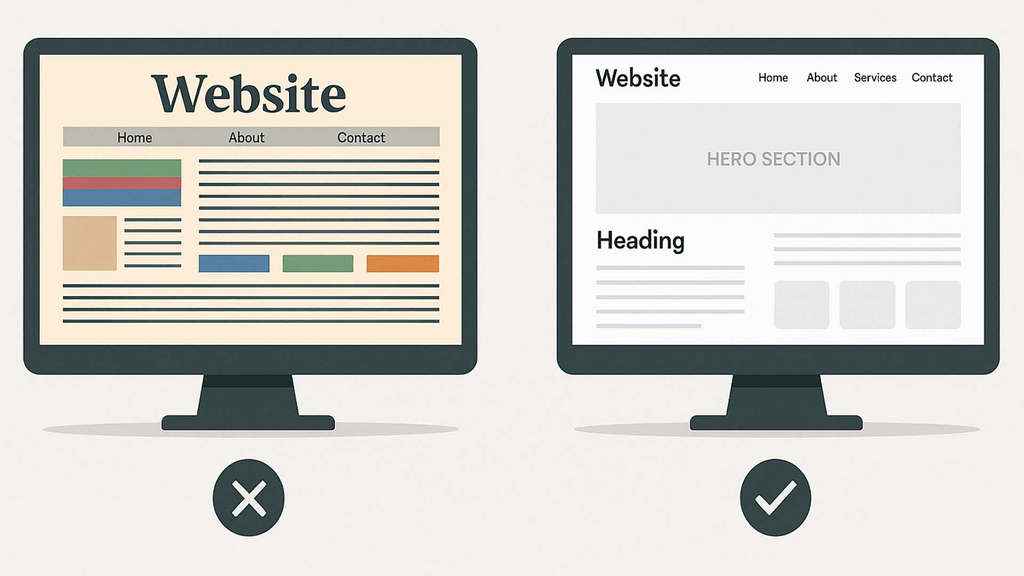
Design trends are not a reason to rebuild a website every single year. But a site that visibly belongs to another era can directly affect how visitors perceive your business credibility.
Outdated layouts, cluttered pages, inconsistent fonts, poor spacing, low-quality visuals, and excessive text make a website harder to understand. When every section competes for attention, visitors struggle to identify what actually matters.
Modern business website design is not simply about making a homepage look attractive—it is about creating clear hierarchy. Visitors should immediately understand who you are, what you provide, why it matters, and what action they should take next.
Take a look at your homepage without thinking about how long the business has owned the website. Ask whether it still represents the quality and positioning of the company today. If the answer is no, the problem is bigger than just the colours or logo.
2. Your website is difficult to use on mobile

Your desktop website may look polished while your mobile experience tells a completely different story.
Menus that are difficult to open, buttons that are too small to tap, oversized banners, cramped text, horizontal scrolling, and forms that are frustrating to complete will quickly push potential clients away.
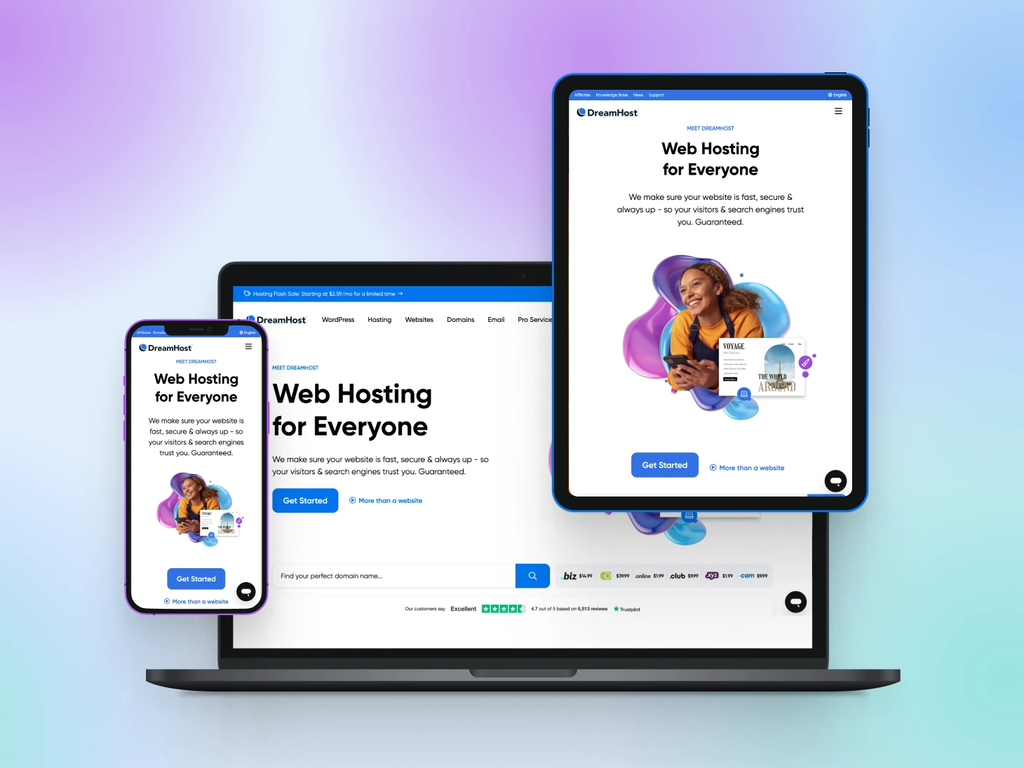
Responsive web design ensures that a website adapts fluidly to different screen sizes instead of forcing users to pinch and zoom around a desktop layout.
Test the website yourself on multiple phones. Open the navigation menu, read a core service page, submit a test form, tap the primary call-to-action, and try finding contact details without using search. A good mobile experience should feel effortless.
3. Your pages take too long to load
Visitors rarely care why a website is slow. They simply know that it is slow, and they bounce.
Large uncompressed image files, unnecessary scripts, outdated plugins, excessive animations, poor hosting configurations, and inefficient code all degrade overall speed. Every additional second of delay creates another opportunity for someone to leave before reading your value proposition.
Start by reviewing high-traffic pages. Check compression, caching, scripts, web fonts, video embeds, redirects, and third-party integrations. A website redesign is the ideal opportunity to address these technical issues at the architectural level rather than continually patching them.
4. Visitors cannot find what they need
A website should not force customers to hunt for basic information. If users cannot quickly locate your services, pricing guidelines, contact details, product categories, portfolio case studies, or office locations, your information architecture needs a reset.
Effective business website design starts with understanding customer search intent:
- What does the company do?
- Who is this solution built for?
- What makes your approach different?
- How does the onboarding or delivery process work?
- How can I easily contact the team?
Your menu should reflect customer needs rather than internal corporate departments. Use clear terminology, group related topics logically, and keep primary pages within easy reach.
5. Your website gets traffic but very few enquiries
Traffic by itself does not tell you whether your site is doing its job. A business can receive steady visitors through search engines, social media, advertising, and referrals, yet still struggle to convert those visits into qualified leads.
Examine what happens after someone arrives on your landing pages:
- Are the calls to action clear and visible?
- Are service pages convincing and outcome-focused?
- Is the enquiry form short and frictionless?
- Does the visitor understand what happens next after submitting?
This is where strategic web development services make a difference. The layout must guide users toward high-value actions while providing enough clarity to make informed decisions.
6. Your content no longer matches your business
Businesses evolve faster than websites. You might have launched offering three services and now deliver ten. Your target audience might have shifted upmarket, your positioning may be more specialised, or your team may have expanded into new sectors.
When your website describes your business as it existed years ago, it causes buyer hesitation. Review your pages to ensure they communicate what you offer today. Replace vague copy with concrete explanations of processes, outcomes, and deliverables.
7. Your branding is inconsistent across the site
Your website might have accurate information, yet still come across as disjointed because the visual language shifts from page to page. Inconsistent button styling, mismatched typography, random colours, and conflicting layouts erode professional credibility.
A full redesign establishes a unified visual design system—encompassing typography scales, button states, spacing rules, card components, icon styles, and page frameworks. Consistency ensures visitors always feel they are interacting with a singular, trustworthy brand.
8. Your website does not reflect your brand anymore
Sometimes the issue is not that the website is broken—it simply doesn't feel like your company anymore. Perhaps your brand has evolved from a small local firm to an enterprise provider, yet the website still looks like an early prototype.
Your digital footprint should support the market tier you want to command. Copy, imagery, art direction, and user journeys must align with the quality of your sales decks, marketing campaigns, and real-world reputation.
9. Your technology is limiting what the website can do
An outdated content management system (CMS) or rigid architecture eventually becomes a bottleneck. If adding new landing pages, tweaking sections, embedding tools, or optimizing performance requires constant developer intervention, growth stalls.
Modern web development services provide scalable foundations that are straightforward to maintain, fast to update, and secure. Identify existing technical constraints across hosting, integrations, and CMS workflows before rebuilding.
10. You have no clear idea what users are doing
One of the biggest warning signs isn't visual—it is a lack of actionable data. If you cannot identify which pages drive high engagement, where drop-offs occur, or which calls-to-action generate pipeline, you are forced to make redesign decisions based purely on assumptions.
A modern rebuild should integrate robust tracking out of the box—monitoring interactions, conversion paths, and device performance so ongoing refinements are guided by evidence.
What Should You Fix Before Redesigning Everything?
Not every legacy website demands a ground-up rebuild. In some instances, targeted improvements to copywriting, layout hierarchy, or performance optimization resolve the bottlenecks. In other cases, underlying technical debt makes a full redesign the most cost-effective path.
Start with a structured audit covering user journeys, mobile responsiveness, Core Web Vitals, navigation taxonomy, and CMS capabilities. This ensures you address the core business friction rather than merely refreshing the visuals.
What a Modern Business Website Should Achieve
A website shouldn't just be an online business card. It serves as an active growth engine that guides qualified visitors toward meaningful interactions—whether that is scheduling a consultation, purchasing a solution, or submitting a detailed project brief.
With clean responsive web design and a solid architecture, your website effortlessly expands alongside new campaigns, product lines, and business milestones.
Final Takeaway: Building with Purpose
Your website doesn't need to completely break down before you plan an upgrade. Warning signs like mobile friction, slow load speeds, poor enquiry rates, and outdated tech stack are clear signals that your site is hindering growth.
A successful redesign begins with one fundamental question: What is stopping your website from doing its job? Once answered, your brand, content, and engineering can be aligned around measurable results.
Ready to build a digital platform that performs?
Let's evaluate your website and build a high-performing digital experience tailored to your business goals. Book a free discovery call today.
Schedule Discovery Call