

The harsh truth? 83% of business websites launched in 2025 failed to meet their traffic and conversion goals within the first six months.
If you're reading this, you're probably wondering why your website isn't performing the way you expected—or you're smart enough to avoid the mistakes that sink most business websites before they even get off the ground.
After analyzing hundreds of failed website projects and successful redesigns over the past year, the patterns are impossible to ignore. The difference between websites that generate leads and revenue versus those that collect digital dust isn't usually about budget or industry. It's about understanding what actually matters in 2026.
The $50,000 Website That Generated Zero Leads

Last month, a manufacturing company contacted us after spending over $50,000 with a web design company that promised them a "cutting-edge, beautiful website." The site looked stunning in screenshots. But three months after launch, they had received exactly zero qualified leads.
The problem? The website was built for aesthetics, not for business results.
This story repeats itself thousands of times every year. Business owners invest significant money and time into websites that look professional but fail at their core purpose: driving business growth.
The Seven Critical Mistakes That Kill Business Websites in 2026
1. Mobile Experience Is Still an Afterthought
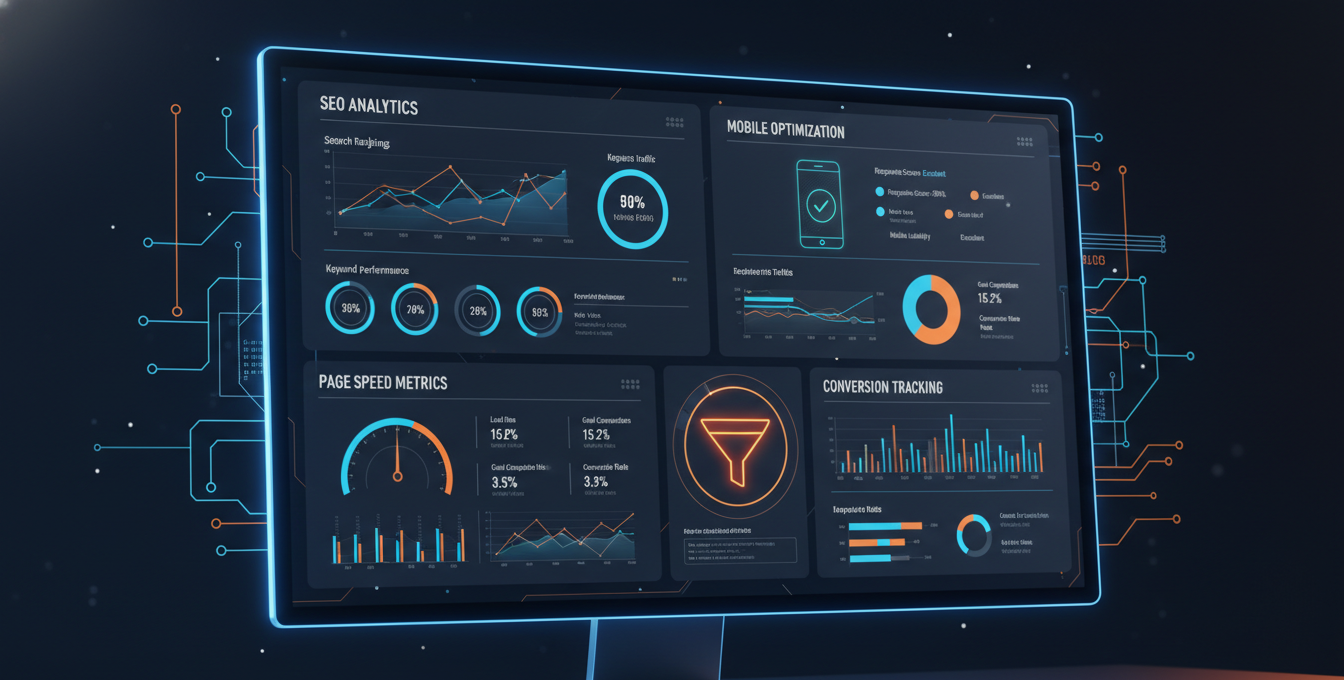
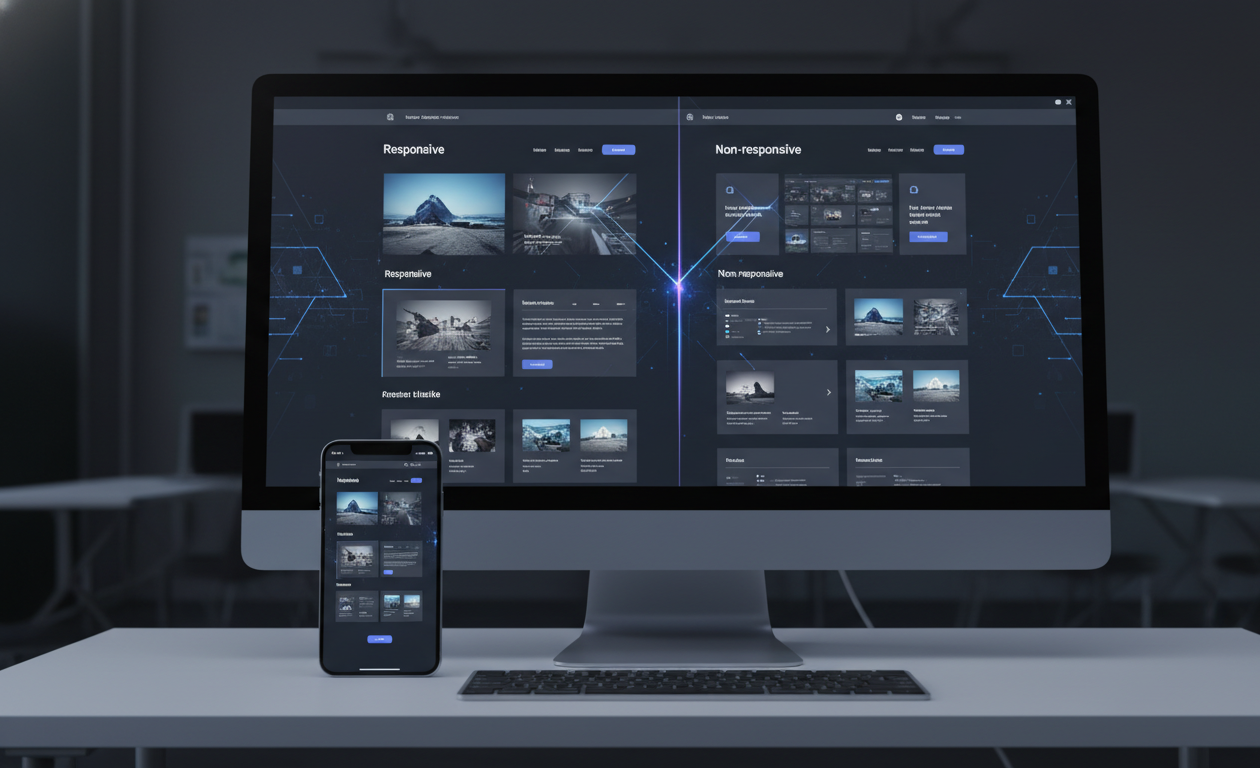
In 2026, over 68% of all business website traffic comes from mobile devices. Yet we regularly see websites where mobile is clearly treated as secondary.
Here's what poor responsive web design actually looks like in practice:
- Buttons that are impossible to tap accurately
- Text that requires zooming to read
- Forms that break on smaller screens
- Images that take 10+ seconds to load on mobile networks
Google's mobile-first indexing means your mobile site is your website in the eyes of search engines. If your mobile experience is poor, your search rankings suffer—regardless of how good your desktop site looks.
Real cost: A client in the financial services industry was losing an estimated $180,000 annually in potential business simply because their mobile checkout process had a poorly designed form that users abandoned.
2. Speed Is No Longer Optional—It's Everything

Page speed has become the silent killer of website performance. Research from 2025 shows that:
- 53% of mobile users abandon sites that take longer than 3 seconds to load
- A 1-second delay in page load time can result in a 7% reduction in conversions
- Sites loading in under 2 seconds have significantly higher engagement rates
Most businesses don't realize their website is slow until it's too late. Bloated JavaScript frameworks, unoptimized images, and poor hosting choices compound into a website that bleeds potential customers with every delayed second.
3. Ignoring the 2026 SEO Reality
Search engine optimization has evolved dramatically. The SEO tactics that worked even two years ago are often counterproductive today. Common SEO failures we see:
- Zero attention to Core Web Vitals (loading performance, interactivity, visual stability)
- Missing or poorly implemented schema markup
- Terrible internal linking structure
- Content that doesn't match actual search intent
- Complete absence of E-E-A-T signals (Experience, Expertise, Authoritativeness, Trust)
Google's algorithm updates throughout 2025 and early 2026 have made it clear: user experience signals are ranking factors. A beautiful website that provides a poor experience won't rank well, regardless of how optimized your meta tags are.
4. The Conversion Rate Optimization Blind Spot

Here's a frustrating scenario: Your website gets decent traffic, but visitors aren't converting into customers or leads.
The culprits are usually:
- Unclear value propositions that don't communicate what you actually do
- Weak or confusing calls-to-action
- Forms that ask for too much information
- Zero social proof (testimonials, case studies, trust signals)
- Multiple competing CTAs that confuse rather than guide
We've seen website redesign services improve conversion rates by 200-400% simply by addressing these fundamental issues. The traffic was already there; the website just wasn't designed to convert it.
5. The Technical Debt Time Bomb
Many websites are built on shaky technical foundations that create ongoing problems:
- Outdated CMS platforms with security vulnerabilities
- Custom code that only one developer understands
- Plugin conflicts that break functionality
- Zero backup or disaster recovery plans
- Hosting environments that can't handle traffic spikes
One retail client came to us after their website crashed during their biggest sales weekend of the year. The web design company that built their site had used a budget hosting plan that couldn't handle the traffic surge. The crash cost them an estimated $75,000 in lost revenue.
Technical excellence might not be visible to end users, but technical failures certainly are.
6. Ecommerce Websites Built for Failure
The explosion of ecommerce has led to a gold rush of poorly executed online stores. Ecommerce website development requires specialized expertise that goes far beyond making a site "look nice."
Critical ecommerce failures:
- Complicated checkout processes with too many steps
- Poor product search and filtering
- Inadequate product information and imagery
- No clear shipping and return policies
- Security concerns that scare away customers
- Lack of payment options that customers expect
A 2026 study found that the average ecommerce cart abandonment rate is 70%. For every 10 people who add products to their cart, 7 leave without purchasing. Often, this isn't about price—it's about friction in the buying process.
7. Treating Your Website as a "Set It and Forget It" Asset
Perhaps the biggest mistake is viewing a website as a one-time project rather than an ongoing business asset that requires maintenance and optimization.
Websites need:
- Regular content updates to stay relevant
- Continuous performance monitoring
- Security updates and patches
- A/B testing to improve conversion rates
- Analytics review to understand user behavior
- SEO adjustments based on algorithm changes
The businesses that succeed with their websites in 2026 treat them as living, evolving platforms—not static brochures.
What Modern Businesses Are Doing Differently
Let's flip the script and look at what actually works.
Strategy Before Design
Successful website projects in 2026 start with strategy, not aesthetics. Before a single pixel is designed, there should be clear answers to:
- Who is your target audience?
- What actions do you want them to take?
- How will you measure success?
- What differentiates you from competitors?
- What content and functionality do users actually need?
When seeking website development services, the first conversation should be about your business goals, not color schemes.
Data-Driven Decision Making
Modern responsive web design is backed by data. Heat mapping tools show exactly where users click. Session recordings reveal where they get confused. Analytics identify where they drop off.
This data transforms web design from subjective opinions ("I think this looks better") to objective improvement ("we know this performs better").
User-Centric Experience Design
The best websites in 2026 are obsessively focused on user experience:
- Clear navigation that makes sense to your actual users (not just to you)
- Accessibility features that make your site usable by everyone
- Loading performance that respects users' time
- Content hierarchy that guides users naturally toward conversion
- Mobile-first design that acknowledges how people actually browse
Integration with Business Systems
Your website shouldn't exist in isolation. Modern websites integrate seamlessly with:
- CRM systems for lead management
- Email marketing platforms
- Inventory management for ecommerce
- Analytics and tracking tools
- Customer support systems
These integrations turn your website from a standalone marketing tool into a central hub of your business operations.
The webmerito Approach: Why We're Different
At webmerito, we've seen every website mistake in the book—and we've learned from them. Our approach is built on the failures and successes of hundreds of projects.
Here's what we believe:
- Your website isn't about us; it's about your business results. We don't push trendy designs that win awards but fail to convert. We build websites that make you money.
- We measure success by your metrics: more leads, more sales, lower bounce rates, higher engagement. If those numbers don't improve, we haven't succeeded.
Our process includes:
- Comprehensive strategy sessions before any design work begins
- Competitive analysis to understand what's working in your industry
- User research to build for your actual audience, not assumptions
- Performance optimization from day one, not as an afterthought
- Conversion-focused design backed by behavioral psychology
- Ongoing optimization because launching is just the beginning
When you need website redesign services, we start by diagnosing exactly why your current site is underperforming. Often, the solution isn't a complete rebuild—it's strategic improvements to critical elements.
For ecommerce website development, we obsess over the user journey from product discovery to completed purchase, eliminating every possible source of friction.
The Real Cost of a Failed Website
Let's talk numbers. A failed website costs you more than just the initial investment.
Consider these hidden costs:
- Lost revenue from poor conversion rates
- Wasted advertising spend driving traffic to a site that doesn't convert
- Damaged brand perception from poor user experience
- Lost search engine rankings from technical issues
- Competitive disadvantage as rivals capture your potential customers
A $10,000 website that generates zero results is infinitely more expensive than a $30,000 website that generates $500,000 in new business.
How to Choose a Web Design Company That Won't Fail You
Based on everything we've discussed, here's your checklist for vetting web design company partners:
Ask these critical questions:
- What's your process for understanding business goals before design?
Red flag: They jump straight to talking about design trends or showing you their portfolio. - How do you approach mobile experience?
Red flag: "We'll make it responsive" without specifics on testing and optimization. - What's your strategy for page speed?
Red flag: They don't mention it or say "we'll optimize after launch." - How will you improve our search engine visibility?
Red flag: Vague promises about "SEO-friendly design" without specific technical details. - What analytics and tracking will be implemented?
Red flag: Basic Google Analytics setup with no discussion of conversion tracking or goals. - What happens after launch?
Red flag: "We hand it over and you're good to go" with no ongoing support or optimization. - Can you show me measurable results from previous clients?
Red flag: Beautiful portfolios with zero discussion of actual business outcomes.
The 2026 Website Success Framework
If you take nothing else from this article, remember this framework for website success:
- Foundation Layer:
- Fast, secure, and scalable technical infrastructure
- Mobile-first responsive web design
- Clean, maintainable code
- Proper SEO technical setup
- Experience Layer:
- Intuitive navigation and information architecture
- Conversion-optimized design
- Clear value propositions
- Strategic calls-to-action
- Growth Layer:
- Content strategy for ongoing SEO
- A/B testing and optimization
- Performance monitoring
- Regular updates and improvements
Skip any layer, and your website's foundation becomes unstable.
Taking Action: Your Next Steps
If you're currently stuck with a failing website, or you're planning a new site and want to avoid these mistakes, here's what to do:
Immediate actions:
- Run a speed test on your current site (use Google PageSpeed Insights)
- Check your mobile experience on actual devices
- Review your Google Analytics to understand where users are dropping off
- Audit your conversion path—how many steps to contact/purchase?
- Get an objective technical assessment
Strategic decisions:
- Determine if you need website redesign services or if targeted improvements would suffice
- For online stores, evaluate whether your ecommerce website development approach needs a complete rethink
- Choose partners based on results and process, not just portfolio aesthetics
Conclusion: Websites That Win in 2026
The difference between websites that succeed and those that fail has never been more apparent. In 2026, it's not enough to have a website that looks good. Your site must be fast, mobile-optimized, conversion-focused, and built on solid technical foundations.
The businesses winning online right now understand that their website isn't a marketing expense—it's a revenue-generating asset that requires strategic investment and ongoing attention.
At webmerito, we've built our entire approach around helping businesses avoid the costly mistakes that doom most websites to failure. We combine strategic thinking, user-centered design, technical excellence, and continuous optimization to build websites that actually achieve business goals.
Don't let your website become another statistic in the failure column. Whether you're building from scratch or fixing what's broken, the key is starting with the right foundation and the right partner.
Ready to build a website that actually works? The first step is understanding exactly what's holding back your current site or what pitfalls to avoid in your new project. Let's have a conversation about your specific situation and how to build a website that drives real business results in 2026.
Ready to build a website that actually works?
The first step is understanding exactly what's holding back your current site. Let's build a platform that drives real growth for your business in 2026.
Book Free Strategy Session